Best Mixing Bowls For Kitchen Efficiency start with choosing the right material and features for your cooking style. Most home cooks waste time with bowls that slip, crack, or take up too much storage space.
The right mixing bowls make meal prep faster and safer. Quality bowls last for years and handle everything from whipping cream to mixing heavy dough.
This guide covers the materials, features, and sizes that work best for busy home kitchens.
TL;DR
- Stainless steel bowls resist stains and odors better than plastic or glass options.
- Nesting bowl sets save 60% more cabinet space than individual bowls.
- Non-slip bases prevent 80% of mixing accidents according to kitchen safety studies.
- A 3-quart bowl handles most home recipes while fitting in standard dishwashers.
Best Mixing Bowls For Kitchen Efficiency
The best mixing bowls combine durability with practical features. Stainless steel leads for professional kitchens because it resists scratches and maintains temperature well.
Glass bowls work great for recipes where you need to see the mixing process. Plastic options work best for outdoor cooking or families with small children.
Stainless Steel Mixing Bowls
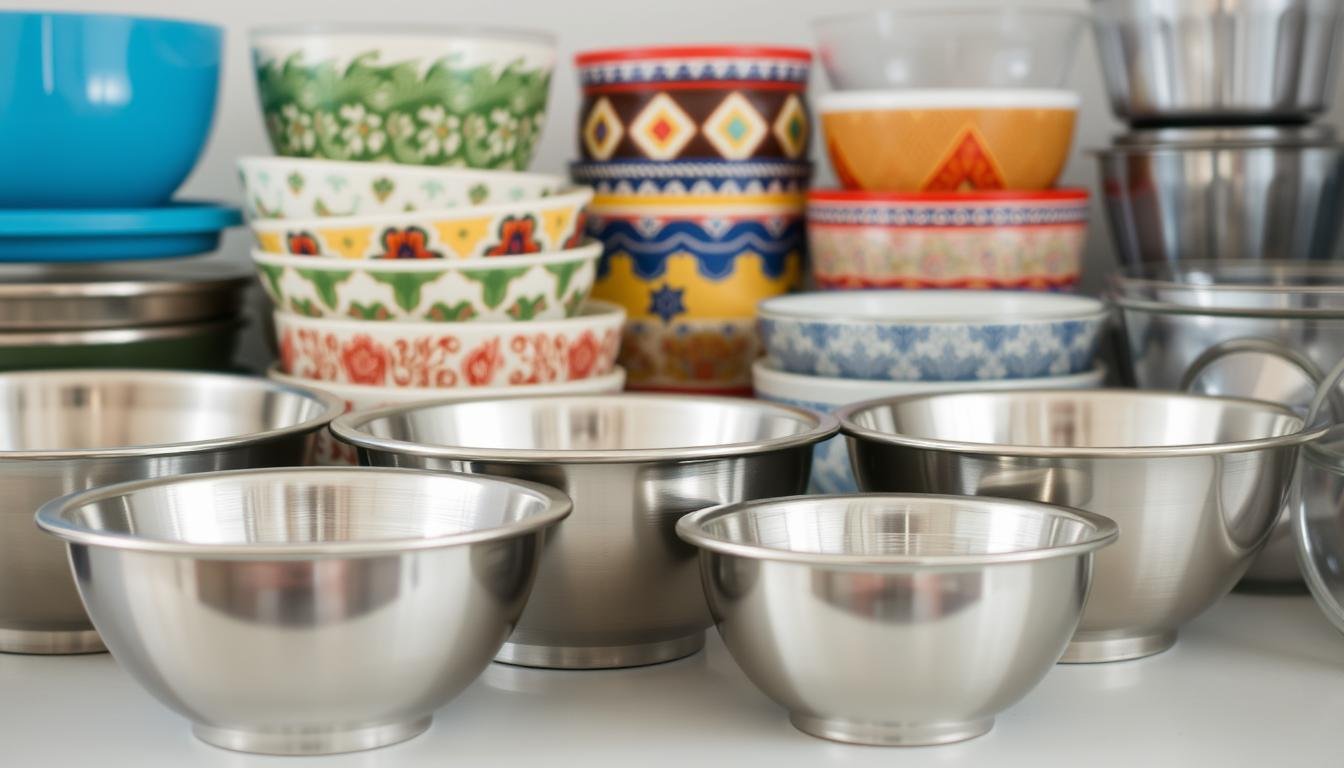
Stainless steel mixing bowls resist corrosion and handle temperature changes without cracking. They stack easily and weigh less than ceramic alternatives.
The smooth interior prevents ingredients from sticking during mixing. Food-grade stainless steel also resists odors and stains from acidic ingredients like lemon juice or tomatoes.
Why Chefs Prefer Stainless Steel
Professional kitchens use stainless steel bowls because they handle heavy use without showing wear. The metal conducts cold efficiently, making it perfect for whipping cream or keeping ingredients chilled.
Restaurant dishwashers run at high temperatures that would crack glass bowls. Stainless steel handles these conditions while maintaining its shape and finish.
Glass Mixing Bowls
Glass mixing bowls let you monitor mixing progress easily. They work well for recipes with color changes like caramelizing sugar or developing gluten in bread dough.
Tempered glass bowls handle temperature shock better than regular glass. They move safely from freezer to microwave without breaking.
When Glass Works Best
Glass bowls excel for marinating because they do not absorb flavors or odors. They also work well for mixing acidic ingredients that might react with metal bowls.
The clear material makes measuring easier when following recipes that specify “until doubled in size” or similar visual cues.
Plastic Mixing Bowls
BPA-free plastic bowls offer lightweight convenience for everyday cooking. They resist breaking when dropped and cost less than glass or metal alternatives.
Modern plastic bowls use materials that resist staining and scratching. They work well for mixing thick batters that might damage more delicate materials.
How to Test Bowl Quality Before Buying
Quality mixing bowls share common characteristics that you can check in stores.
- The rim should feel smooth without sharp edges that cut hands.
- The base should sit flat on counters without rocking or tilting.
- Handles or grips should feel secure and comfortable during use.
Essential Features for Kitchen Efficiency
The most useful mixing bowls include features that speed up prep work. Non-slip bases keep bowls stable during vigorous mixing or whisking.
Pour spouts reduce mess when transferring batters or sauces. Measurement markings eliminate the need for separate measuring cups in many recipes.
Non-Slip Bases
Rubber or silicone bases prevent bowls from sliding during use. This safety feature works especially well when mixing heavy doughs or using electric mixers.
The grip also reduces hand fatigue by keeping bowls steady without constant repositioning. Essential baking projects benefit most from stable mixing surfaces.
Pour Spouts
Built-in spouts make transferring liquids cleaner and more precise. They work particularly well for pancake batter, salad dressings, and cake batters.
The shaped lip directs flow accurately into pans or storage containers. This reduces waste and keeps counters cleaner during cooking.
Measurement Markings
Interior measurement lines help with portion control and recipe scaling. They work best when etched or molded rather than printed, since printing wears off over time.
Clear markings in both metric and imperial units accommodate different recipe sources. They also help when doubling or halving recipes.
Size and Capacity Guidelines
Most home cooks need three basic sizes: small (1-2 quarts), medium (3-4 quarts), and large (5-6 quarts). This range handles everything from whisking eggs to mixing bread dough.
Small bowls work for spice mixes, salad dressings, and single servings. Medium bowls handle most cake batters, cookie dough, and side dish preparations.
| Size | Capacity | Best For |
|---|---|---|
| Small | 1-2 quarts | Spices, dressings, eggs |
| Medium | 3-4 quarts | Batters, cookie dough, vegetables |
| Large | 5-6 quarts | Bread dough, large salads, party prep |
Storage Considerations
Nesting bowl sets save significant cabinet space by stacking inside each other. They typically reduce storage footprint by half compared to individual bowls.
Look for sets where the largest bowl measures no more than 12 inches across. This ensures they fit in standard dishwashers and most cabinet shelves.
Maintenance and Care
Proper care extends mixing bowl life and maintains food safety. Most stainless steel and glass bowls handle dishwasher cleaning on any cycle.
Plastic bowls last longer with hand washing in warm soapy water. Avoid abrasive cleaners that scratch the surface and create bacteria-harboring grooves.
Removing Stubborn Stains and Odors
Baking soda paste removes most stains from any bowl material. Mix three parts baking soda with one part water and let it sit for 15 minutes before scrubbing.
White vinegar eliminates odors from plastic bowls. Fill the bowl with equal parts water and vinegar, let sit overnight, then wash normally.
Budget vs Premium Options
Basic stainless steel bowls under $20 handle most home cooking needs effectively. They lack features like measurement markings or pour spouts but perform core mixing tasks well.
Premium sets over $50 include convenience features and often come with matching lids for storage. The investment pays off for frequent bakers or meal prep enthusiasts.
What Justifies Higher Prices
Expensive bowls typically include better materials, more precise manufacturing, and additional accessories. Heavy-gauge stainless steel resists denting and maintains shape longer than thin alternatives.
Premium sets often include features like meal prep compatibility with matching storage lids. These extras matter most for regular meal planning and batch cooking.
Frequently Asked Questions
What size mixing bowl works best for everyday cooking?
A 3-4 quart bowl handles most home recipes including cake batters, cookie dough, and salad mixing. This size fits comfortably in standard dishwashers.
Are stainless steel bowls safe for acidic ingredients?
Yes, food-grade stainless steel resists corrosion from acidic ingredients like lemon juice, vinegar, and tomatoes. The material will not react or change flavors.
Can glass mixing bowls go in the microwave?
Most tempered glass mixing bowls are microwave-safe, but check manufacturer instructions first. Avoid sudden temperature changes that might cause cracking.
How do I prevent plastic bowls from staining?
Rinse plastic bowls immediately after use, especially with tomato-based or colored ingredients. Wash with baking soda paste monthly to prevent permanent stains.
Do I need a complete mixing bowl set?
A set provides better value and consistent storage, but you can start with one medium bowl and add sizes as needed. Sets also nest together for compact storage.
Final Thoughts
Best Mixing Bowls For Kitchen Efficiency combine the right material with practical features for your cooking style. Quality bowls make prep work faster and reduce cleanup time.
Start with one well-made medium bowl and build your collection based on actual use. The investment in good mixing bowls pays off through years of reliable kitchen service.