| DifficultyEasy | Total Time5 min | Prep Time5 min | Cook Time0 min |
| ServesN/A | Cost Per ServingN/A | CaloriesN/A | Recipe TypeGuide |
This Microplane or Zester Guide shows you how to unlock your dishes’ full flavor potential with these essential kitchen tools. These gadgets grate and zest ingredients like citrus fruits, ginger, and cheese to release oils and essences into your recipes.
Whether you’re a professional chef or home cook, knowing how to use these tools properly can transform your cooking and add fresh, complex flavors without extra salt or sugar.
Why You’ll Love This Guide
- Essential Knowledge – Learn proper techniques for maximum flavor extraction.
- Versatile Applications – Discover multiple ways to use microplanes and zesters.
- Safety Tips – Understand how to use these tools safely and effectively.
- Tool Selection – Choose the right type for your specific cooking needs.
- Professional Results – Achieve restaurant-quality flavors at home.
Microplane or Zester Guide
Complete guide to using microplanes and zesters for maximum flavor extraction in your cooking.
What You Need
- Microplane or zester tool
- Ingredients to grate (citrus, cheese, spices)
- Cutting board or stable surface
- Guard or holder for safety
Basic Technique
- Prepare workspace. Set up stable cutting board and gather ingredients.
- Hold properly. Grip tool firmly with comfortable hand position.
- Position ingredient. Hold ingredient away from blade with non-dominant hand.
- Grate gently. Move tool away from body with light to moderate pressure.
- Clean immediately. Wash under warm water and dry thoroughly.
Microplane or Zester Guide Recipe
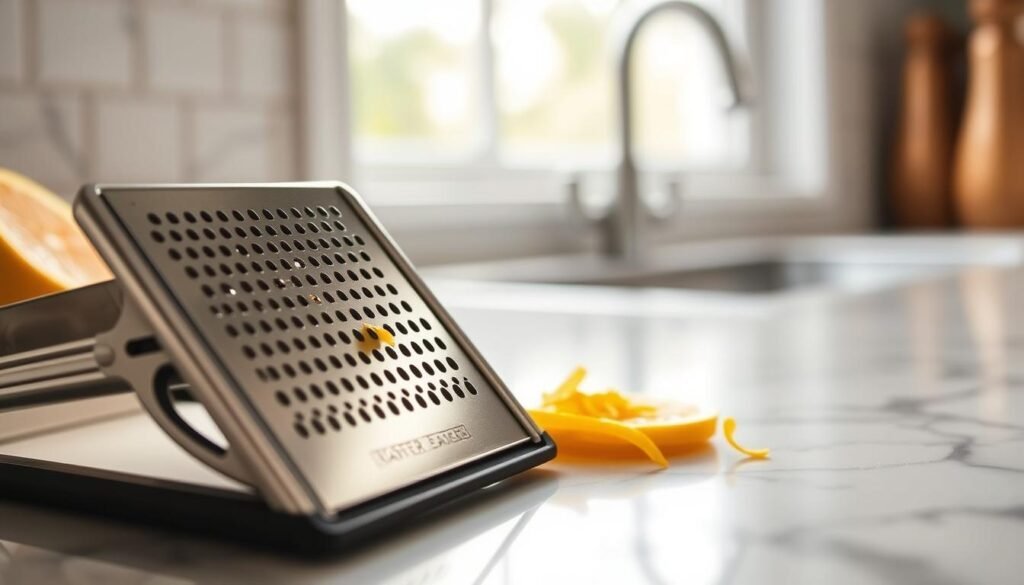
Understanding how to properly use a microplane or zester transforms your cooking by releasing essential oils and aromatics from ingredients.
Essential Equipment
- Microplane or zester with appropriate grating size
- Safety guard or holder
- Stable cutting board
- Ingredients to grate (citrus fruits, cheese, spices)
Step-by-Step Instructions
- Set up workspace. Place cutting board on stable surface and gather all ingredients you plan to grate.
- Choose correct tool. Select fine grater for citrus zest and Parmesan, coarse grater for ginger and nutmeg.
- Master the grip. Hold microplane firmly but gently with comfortable hand position for control.
- Position safely. Keep non-dominant hand holding ingredient away from sharp grating surface.
- Apply proper pressure. Use light pressure for delicate citrus zest, moderate pressure for harder ingredients.
- Move directionally. Always grate away from your body in smooth, consistent strokes.
- Stop at right depth. For citrus, stay in colored peel layer and avoid bitter white pith beneath.
- Clean immediately. Wash under warm water with soft brush and dry completely to prevent rust.
Technique Tips
- Timing – 2-3 minutes for citrus zesting
- Pressure – Light for zest, moderate for cheese
- Technique – Always grate away from body
Safety and Technique Tips
Proper technique ensures both safety and maximum flavor extraction from your ingredients.
- Always use a guard or holder when grating small ingredients.
- Keep fingers curled and away from the grating surface at all times.
- Replace dull or damaged tools immediately for best results and safety.
- Clean tools thoroughly after each use to prevent bacteria and flavor transfer.
Tool Selection Guide
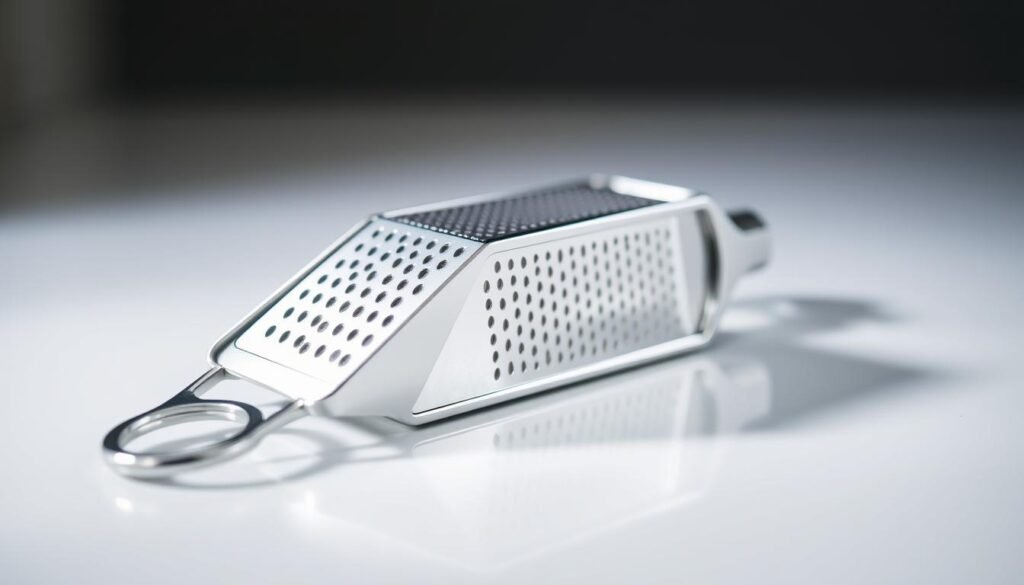
Fine graters – Perfect for citrus zest, Parmesan cheese, and delicate spices like nutmeg.
Coarse graters – Better for ginger, cinnamon sticks, and chocolate shaving.
Stainless steel – Most durable option that resists rust and maintains sharp edges longer.
Ergonomic handles – Reduce hand fatigue and provide better control during use.
Tips and Variations
- Citrus preparation – Roll citrus fruits firmly on counter before zesting to release more oils.
- Cheese grating – Chill hard cheeses in freezer for 10 minutes for easier grating.
- Spice freshness – Grate whole spices just before use for maximum flavor impact.
- Chocolate technique – Use room temperature chocolate for smooth, even shavings.
- Ginger prep – Freeze fresh ginger for easier grating and longer storage.
Ingredient Applications
Citrus fruits – Lemons, limes, oranges provide bright, fresh flavors for both sweet and savory dishes.
Hard cheeses – Parmesan, Pecorino Romano grate into fine, fluffy texture that melts beautifully.
Fresh spices – Nutmeg, cinnamon, ginger release essential oils when freshly grated.
Chocolate – Creates elegant shavings for dessert garnishes and baking applications.
Garlic – Produces fine paste-like consistency that distributes evenly in sauces.
Estimated Cost Per Use
- Quality microplane – $15-25 (one-time purchase)
- Replacement when dull – $15-25 (every 2-3 years)
- Safety guard – $5-8 (optional accessory)
Total initial investment: $20-33 for years of enhanced cooking.
Prices are estimates based on average US kitchen store costs and will vary by location and brand.
How to Store and Maintain
Store microplanes and zesters in a drawer with blade guards or hang on magnetic strips to protect sharp edges. Keep them completely dry to prevent rust and bacteria growth.
Clean immediately after each use with warm water and soft brush, paying attention to remove all food particles from the fine teeth.
What to Use This Guide For
This technique works perfectly for enhancing desserts with fresh citrus zest, adding depth to pasta dishes with grated Parmesan, and creating aromatic spice blends. The fine texture created by proper microplaning distributes flavors evenly throughout your cooking.
Use these skills to transform everyday ingredients into restaurant-quality flavor enhancers that make simple dishes taste complex and sophisticated.
Recommended Kitchen Gear
* As an Amazon Associate I earn from qualifying purchases at no extra cost to you.
Frequently Asked Questions
What is the difference between a microplane and a zester?
A microplane has fine blades for grating cheese, ginger, and citrus zest while a zester is specifically designed for citrus fruit zest. However, many microplanes can also zest effectively.
What type of microplane is best for grating hard cheeses like Parmesan?
A fine-grated microplane is perfect for Parmesan cheese as it creates light, fluffy texture that melts beautifully.
How do I clean my microplane or zester properly?
Wash your microplane under warm water and scrub gently with a soft brush. For stubborn residue, soak in soapy water first then dry completely.
Can I use a microplane for grating spices like nutmeg or cinnamon?
Yes, use a microplane for whole spices as it releases their essential oils and adds maximum flavor to your dishes.
What are common mistakes to avoid when using these tools?
Avoid zesting too deep into bitter pith, using dull tools, improper storage, and neglecting proper cleaning after each use. Master the proper Microplane or Zester Guide techniques to get the best results.
Want to save this for later? Pin it!


Focused on simplicity and flavor, Ryan helps readers create quick vegan meals and snacks without the overwhelm. Whether you’re new to vegan cooking or just want to keep it simple, Ryan’s tips, guides, and no-fuss approach make plant-based eating accessible and enjoyable for everyone.