Kitchen Spatula options range from flexible silicone to sturdy metal, and choosing the right ones transforms your cooking experience. Most home cooks rely on whatever spatula came with their first cookware set without considering how different materials excel at different tasks.
The right spatula protects your cookware, prevents food from sticking or breaking, and makes every flip, scrape, and spread more efficient. Whether you’re flipping pancakes, scraping bowls, or spreading frosting, having the proper tool makes all the difference.
By the end of this guide, you’ll know which spatula materials work best for your cooking style, what features to prioritize, and how to build a collection that handles every kitchen task.
TL;DR
- Silicone spatulas protect non-stick cookware and resist heat up to 500°F without melting.
- Metal spatulas provide precision for grilling and heavy-duty cooking but can scratch delicate surfaces.
- Flexible rubber spatulas excel at scraping bowls completely clean and folding ingredients gently.
- A basic collection needs three types: a silicone turner, a metal grilling spatula, and a flexible scraper spatula.
* As an Amazon Associate I earn from qualifying purchases at no extra cost to you.
Kitchen Spatula Types and Their Best Uses
Different spatula styles handle specific tasks better than others. Understanding these differences helps you choose the right tool for each cooking situation.
Turner Spatulas for Flipping Food
Turner spatulas have wide, flat heads designed for flipping pancakes, burgers, eggs, and fish. They come with straight or angled edges depending on the cooking surface.
The best turner spatulas have thin leading edges that slide easily under delicate foods without breaking them. Look for models with beveled edges that taper to almost nothing at the tip.
Scraper Spatulas for Mixing and Folding
Scraper spatulas feature flexible heads that bend to match bowl contours. They excel at combining ingredients, folding batters, and getting every last bit from mixing bowls.
These spatulas typically have curved or straight edges. Curved edges work better for round bowls, while straight edges handle rectangular containers more effectively.
Offset Spatulas for Spreading and Decorating
Offset spatulas have angled blades that keep your hand away from the surface while spreading. They’re essential for frosting cakes, spreading batters, and detailed decorating work.
Professional bakers rely on offset spatulas because the angled design provides better control and prevents wrist strain during extended use.
Spatula Materials Compared
The material determines how a spatula performs, what temperatures it can handle, and which cookware it’s safe to use with.
Silicone Spatulas
Silicone handles temperatures up to 500°F without melting or releasing toxic fumes. This material won’t scratch non-stick surfaces and provides excellent flexibility for scraping.

High-quality silicone spatulas maintain their shape even after thousands of uses. They’re dishwasher safe and resist staining from acidic ingredients like tomato sauce.
Benefits of Silicone
- Heat resistance – safe up to 500°F for high-temperature cooking
- Non-stick safe – won’t scratch delicate pan coatings
- Easy cleaning – dishwasher safe with no special care needed
- Flexibility – bends to scrape bowl curves completely clean
Metal Spatulas
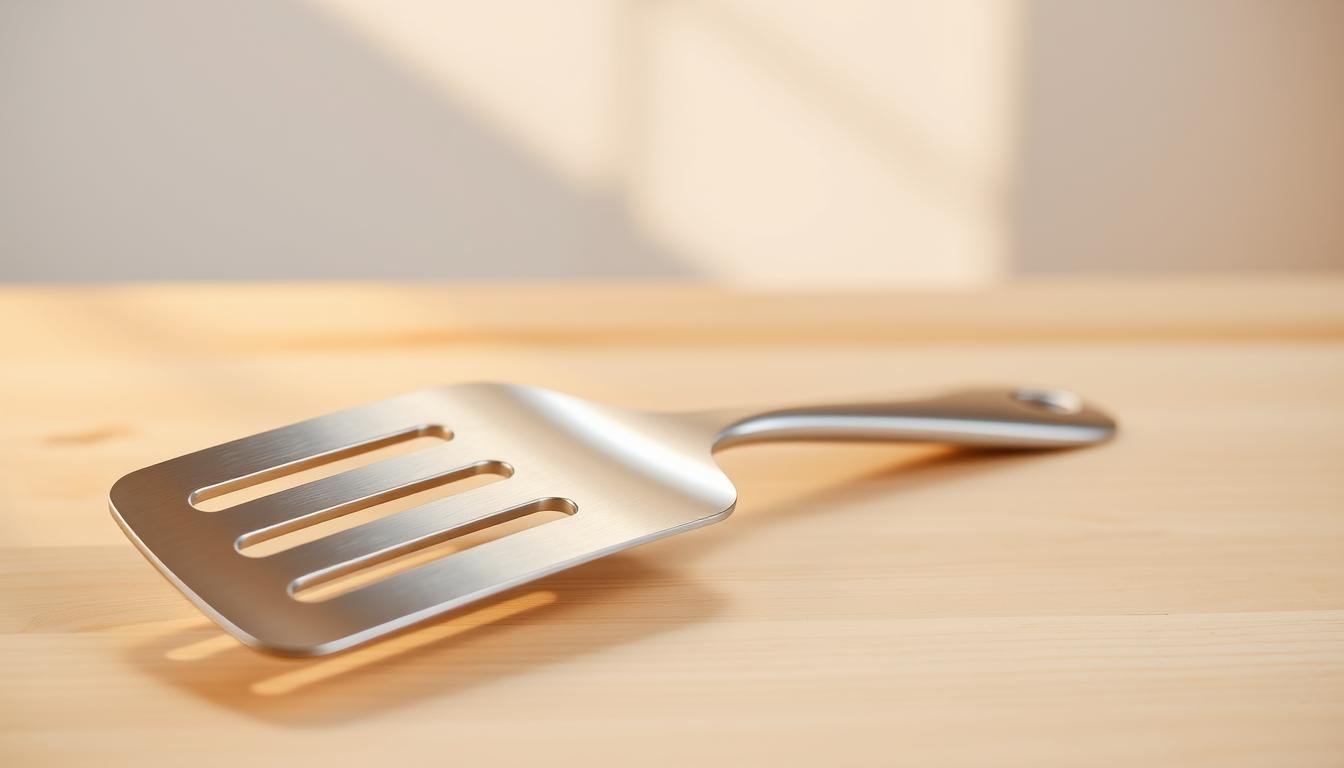
Stainless steel and carbon steel spatulas offer precision and durability that flexible materials can’t match. They’re ideal for tasks requiring firm pressure or scraping stuck-on food.

Metal spatulas excel at grilling because they can handle direct flame contact and provide the leverage needed to flip heavy burgers or steaks.
Metal Spatula Advantages
- Durability – lasts decades with proper care
- Precision – rigid construction allows exact control
- High heat – handles direct flame and oven temperatures
- Leverage – provides power for heavy or stuck foods
Rubber Spatulas
Traditional rubber spatulas offer more flexibility than silicone but less heat resistance. They excel at gentle mixing and complete bowl scraping.
Modern rubber compounds resist cracking and maintain flexibility longer than older formulations. They work well for tasks under 400°F.
Wood and Bamboo Options
Natural materials provide a traditional cooking experience and won’t conduct heat like metal. They’re gentle on all cookware surfaces and add aesthetic appeal to your kitchen.
Wood requires more maintenance than synthetic materials but develops character over time. Proper wood care extends their lifespan significantly.
Heat Resistance and Temperature Limits
Understanding temperature limits prevents spatula damage and ensures food safety during cooking.

Silicone Temperature Ratings
Quality silicone spatulas handle 500°F continuously and brief exposure to higher temperatures. Lower-grade silicone may only withstand 350°F before degrading.
Check manufacturer specifications before using silicone tools in very hot pans or ovens. High-end silicone can even handle brief contact with open flames.
Metal Heat Handling
Stainless steel spatulas handle any cooking temperature including direct grill flames. The handles may become hot during extended high-temperature use.
Look for metal spatulas with heat-resistant handles or use protective gloves when grilling for extended periods.
Preventing Food from Sticking to Your Spatula
Simple techniques keep food from clinging to your spatula during cooking.
- Warm the spatula slightly before using it with cold ingredients like ice cream or thick batters.
- Spray silicone spatulas with cooking oil when working with sticky foods like caramel.
- Keep a small bowl of warm water nearby to rinse the spatula between uses.
- Choose spatulas with smooth surfaces rather than textured ones for easier release.
Building Your Essential Spatula Collection
A well-rounded collection covers all cooking tasks without cluttering your kitchen drawers.
The Basic Three-Spatula Setup
Start with these three essential types that handle 90% of kitchen tasks. This foundation works for most home cooking needs.
- Silicone turner – for non-stick pans and delicate foods
- Metal grilling spatula – for outdoor cooking and heavy-duty tasks
- Flexible scraper – for mixing bowls and batter preparation
Advanced Collection Additions
Add specialized spatulas as your cooking skills and interests expand. These handle specific tasks more effectively than general-purpose tools.
- Offset spatula – for cake decorating and spreading
- Fish spatula – for delicate proteins and thin foods
- Bench scraper – for dough work and portioning
Top Spatula Recommendations by Category
These models consistently receive high ratings from professional chefs and home cooks.
Best Silicone Spatulas
OXO Good Grips Silicone Spatula Set
This set offers comfortable handles with excellent heat resistance up to 600°F. The silicone heads provide perfect flexibility for scraping without being too floppy.
GIR Ultimate Silicone Spatula
Known for vibrant colors and superior durability, GIR spatulas maintain their shape and color even with heavy use. The one-piece construction eliminates weak points where heads typically separate.
Best Metal Spatulas
Winco Blade Hamburger Turner
Restaurant-grade construction with a wide blade perfect for burgers and steaks. The beveled edge slides under food easily while the sturdy handle provides excellent leverage.
Victorinox Slotted Fish Turner
Thin, flexible blade designed specifically for delicate fish fillets. The slotted design allows grease to drain while the precise edge prevents breaking.
Proper Spatula Care and Maintenance
Regular maintenance extends spatula life and prevents contamination between cooking sessions.
Cleaning Different Materials
Silicone and rubber spatulas go in the dishwasher safely, but hand washing preserves flexibility longer. Use warm soapy water and avoid abrasive scrubbers.
Metal spatulas need immediate cleaning after use to prevent stuck-on food from hardening. Serious Eats recommends soaking heavily soiled metal spatulas in warm water before washing.
Storage Solutions
Store spatulas upright in a utensil crock or hang them on hooks to prevent damage. Avoid cramming them into overstuffed drawers where blades can bend or chip.
Keep silicone and rubber spatulas away from sharp objects that might nick the edges. Even small cuts can harbor bacteria and compromise food safety.
When to Replace Your Spatulas
Replace spatulas when edges become rough, cracked, or permanently stained. Warped metal spatulas don’t make proper contact with cooking surfaces.
Silicone spatulas that feel sticky even after washing have degraded and need replacement. This usually happens after several years of regular use.
Frequently Asked Questions
What is the best material for a kitchen spatula?
The best material depends on your cooking style – silicone for non-stick protection, metal for grilling and precision, and rubber for gentle mixing tasks.
Can I use a metal spatula on non-stick cookware?
No, metal spatulas can scratch and damage non-stick coatings, reducing their effectiveness and lifespan.
How do I clean and maintain my spatulas?
Silicone and rubber spatulas are dishwasher safe, while metal spatulas should be hand washed immediately after use to prevent food from sticking.
Are heat-resistant spatulas worth the investment?
Yes, heat-resistant spatulas handle high cooking temperatures without melting or degrading, making them essential for serious cooking.
When should I replace my spatulas?
Replace spatulas when edges become rough or cracked, when they warp, or when silicone feels permanently sticky after cleaning.
Final Thoughts
Kitchen Spatula selection impacts every cooking task from simple scrambled eggs to complex cake decorating. The right materials and designs make cooking more efficient while protecting your valuable cookware.
Start with a quality silicone turner, metal grilling spatula, and flexible scraper to handle most kitchen tasks. Add specialized tools as your cooking interests expand and you identify specific needs in your kitchen routine.